Instadapp DSA smart accounts: the layer everything else stands on
The DeFi Smart Account is the contract that turns a series of separate protocol interactions into one programmable transaction. Understanding it explains every other Instadapp product.
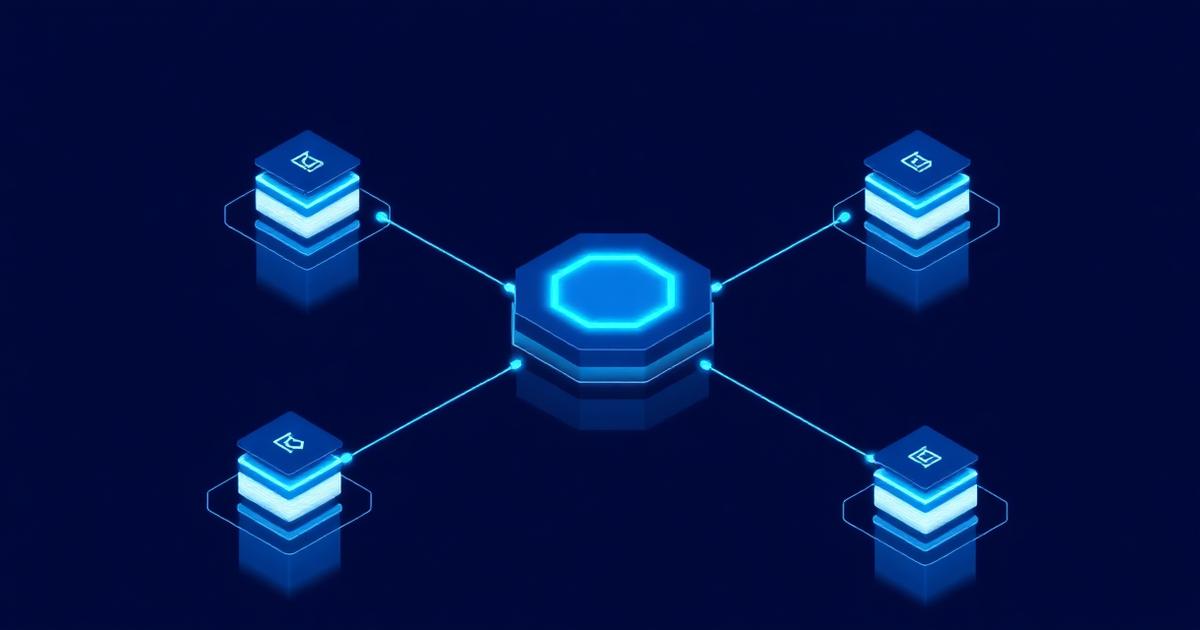
What a DSA smart account is and is not
A DSA is a contract deployed for you and controlled by your wallet. It is not a custodial account: no third party can move funds from it without an authority you granted. It is also not a wallet in the everyday sense, because it has no keys of its own — it acts only when an authorised address instructs it.
Its value is programmability. An ordinary wallet can only send one instruction at a time, so a three-step operation is three signatures, three gas payments and three windows in which the market can move against you. A smart account executes the three steps as one indivisible unit.
Connectors and atomic transaction bundles
Instadapp implements integrations as connectors: small, audited modules that translate a generic instruction such as borrow into the specific calls a given protocol expects. A bundle is an ordered list of connector calls, and the account executes them in sequence within one transaction.
This is how a single click can flash-borrow, repay, withdraw, deposit and re-borrow across two protocols. It is also why new integrations can be added without users migrating: the account stays the same and gains a new connector. When you audit a bundle before signing, you are reading exactly this list.
Authorities, delegation and automation
Each account maintains a set of authorities — addresses permitted to execute on it. You can add a second wallet for redundancy, or authorise an automation contract to perform a narrow task such as topping up collateral when the health factor falls below a threshold.
Delegation is powerful and therefore worth auditing regularly. Review the authority list periodically, remove anything obsolete, and treat any unexpected entry as an emergency. A granted authority is not a key, but for the assets in that account it is close enough to matter.
Practical patterns for multiple smart accounts
Deploying several accounts costs only gas and buys real isolation. Keep a conservative long-term account with low leverage, a separate account for active strategies, and a third for experiments with new protocols. A liquidation in the experimental account cannot touch the others because they are distinct contracts.
Segmentation also clarifies accounting. Each account has its own address and its own history, which makes performance attribution and tax reporting far less painful than untangling one address that did everything.
How to work with a DSA smart account
- 1Deploy the accountCreate the smart account from the dashboard; the deployment transaction registers it against your signing address.
- 2Understand authoritiesReview which addresses are authorised to act on the account and remove any you do not recognise.
- 3Fund the accountTransfer assets into the smart account, which now holds positions on your behalf.
- 4Compose a bundleUse the interface to combine actions — supply, borrow, swap — into one atomic transaction.
- 5Segment by strategyDeploy separate accounts for unrelated strategies so a problem in one does not endanger the other.
Frequently asked questions
+Is a DSA smart account custodial?
No. It is controlled exclusively by the authorities you set, which by default is your own wallet. No Instadapp employee can move assets held by your account.
+What happens to my smart account if the Instadapp interface goes offline?
The contracts remain on chain and independent of the website. Assets can be recovered by interacting with the contracts directly, though that requires technical ability.
+Can I have more than one Instadapp smart account?
Yes, and it is good practice. Separate accounts isolate risk between strategies and make record keeping considerably simpler.
+How do connectors stay secure as new protocols are added?
Connectors are individually audited modules with limited scope, so adding an integration does not change the core account logic that holds your funds.
+Do I pay extra gas for using a smart account instead of a normal wallet?
A single simple action costs marginally more, but any multi-step operation costs far less than the equivalent sequence of separate transactions.
Related material
- What is Instadapp? A middleware layer for decentralised financeInstadapp explained from first principles: its origins as a MakerDAO dashboard, the smart account layer, the product family today, and who the platform is genuinely built for.
- The Instadapp Pro dashboard explained, panel by panelA walkthrough of the Instadapp Pro dashboard: the overview metrics, DeFi assets list, protocol panels, balance sidebar and the automation tools that sit behind them.
- Instadapp vs DeFi Saver: which DeFi manager fits your strategy?Instadapp compared with DeFi Saver across automation, protocol coverage, simulation tools, fees and target users, including where each platform is genuinely the better choice.